

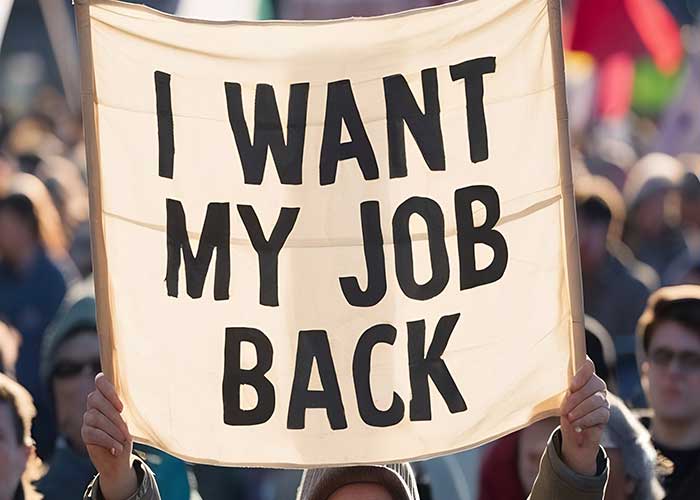
It’s one of the biggest fears for companies planning to partially or fully automate their cleaning operations: employees taking to the barricades. Workers who see the robots not as a helpful aid, but as a threat to their own jobs. Reassurances that automation is necessary — especially given declining workforce numbers — often do little to ease concerns. Enough reason to take a closer look at how real these fears actually are.
In Belfast, for instance, plans to introduce robotic floor cleaners across public buildings quickly sparked outrage. Local unions warned that the machines could replace thousands of cleaning hours each week, calling it “a direct attack on workers.” The backlash was so strong that negotiations had to pause, with trade representatives demanding guarantees for human employment.
Link to Article
Across the Atlantic, the debate over automation in ports escalated into full-blown strikes. In 2024, 47,000 U.S. longshore workers staged walkouts over the introduction of automated cranes and container gates. Signs reading “Machines don’t feed families” captured the sentiment: automation wasn’t just technology, it was perceived as a direct threat to livelihoods.
Link to Article (german)
Jacobin report, workers at a Maspeth, Queens delivery station describe how the ADTA (auto divert to aisle) automation system sped up package sorting while reducing human involvement. Employees reported relentless pace, constant monitoring, and alarms triggered by minor mistakes, creating a sense that they were being measured and compared against machines rather than valued as individuals
In response, workers have engaged in a variety of resistance measures: deliberate slowdowns, filling whiteboards with complaints and notes about unmanageable workloads, openly criticizing the system during team meetings, and even threatening to walk off the job when targets become impossible to meet. These acts of protest, often small and subtle, reflect both practical concerns about employment and broader cultural anxieties about the role of humans in a high-tech, automated workplace.
Link to Article
In South Africa, prominent figures such as billionaire Johann Rupert have publicly warned that robots and AI could fuel civil unrest as job losses mount — and called for society to prepare for pushback.
Link to Article
Beyond the strikes and protest signs, there’s a subtler, yet equally important, layer: the cultural perception of robots. In many workplaces, these machines are not just tools — they are symbols of a changing world that employees feel increasingly alienated from. Robots can evoke anxiety, resentment, even fear, especially when people perceive them as replacing the human judgment, skill, and care that they bring to their roles.
In Belfast, for example, the anger was not just about hours cut — it was about dignity. Workers described feeling like their years of experience and personal effort were being dismissed in favor of a machine that “just rolls around silently, doing the job without complaint.”
The few examples we found in our research suggest that opposition to automation is rarely solely about fear of unemployment. It’s about how humans relate to work, to each other, and to the technologies that mediate their daily lives. Robots become the visible embodiment of a broader debate: what place do people have in a world that increasingly prizes efficiency over human judgment?