


When Lotte E&C (commonly referred to in English coverage as Lotte Construction) announced in July 2026 that it had begun using an autonomous floor-cleaning robot on an active apartment site in Incheon, South Korea, the news read like another isolated pilot. It’s actually more interesting than that: professional cleaning machines are starting to move into one of the hardest environments robotics has yet to crack.
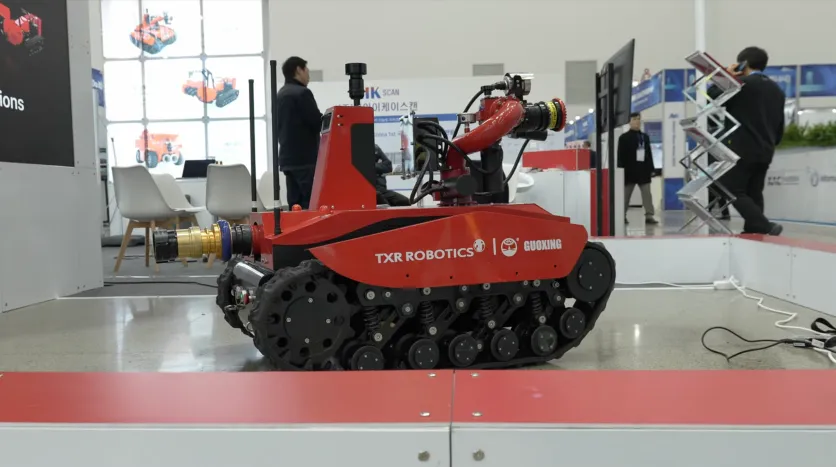
The robot, developed with TXR Robotics, was tested at Lotte’s Incheon Hyoseong District project before entering regular operation. It clears dust and general debris, recognizes workers and obstacles, returns autonomously to its charging point, and runs unattended at night using onboard lighting. Lotte plans to extend it to cleaning work as projects near completion.
A permanent cleaning problem
Cleaning on a construction site isn’t like routine floor care in an office or airport — the site keeps generating new contamination. Cutting, drilling and grinding concrete, brick and stone produce respirable crystalline silica; other work adds cement dust, gypsum dust, wood dust and general debris. The UK’s Health and Safety Executive treats silica dust, non-silica construction dust and wood dust as three distinct hazard categories.
This makes housekeeping a safety issue, not a cosmetic one. OSHA’s construction standard requires debris to be kept clear of work areas, passageways and stairs, with waste removed at regular intervals (29 CFR 1926.25); OSHA’s general workplace rules separately require aisles to stay clear so workers and material-handling equipment can move safely (29 CFR 1910.176). Its silica rule goes further: dry sweeping or brushing is prohibited wherever it would raise silica exposure, unless wet sweeping or HEPA-filtered vacuuming aren’t feasible alternatives (29 CFR 1926.1153).
Lotte frames the robot’s purpose accordingly: freeing workers from repetitive rubbish- and dust-collection so they can focus on construction work.
An obvious task in a difficult environment
Cleaning looks like an ideal automation target — cover an area, collect debris, repeat. The environment is the hard part. A finished building offers stable walls and corridors; an active site changes continuously as materials, barriers, equipment, workers and machinery move through it.
Research consistently flags this as the core obstacle for construction robotics. A 2024 review of 184 publications on mobile construction robots (Zeng et al., Developments in the Built Environment) found a growing field where most systems still haven’t left the lab. Recent work in Automation in Construction, including a 2026 review of construction-robot navigation, still lists localization and real-time mapping on unstructured sites as unresolved problems requiring sensor fusion and dynamic path planning. McKinsey reaches the same conclusion from an industry angle: on-site automation is hard because every project is unique and evolving, with shifting layouts, people and machines in motion, strict safety requirements and often unreliable connectivity.
A pragmatic compromise
The Lotte/TXR navigation approach sidesteps the hardest version of this problem. Rather than building a live map of its surroundings as it works, the robot operates from a pre-prepared map of its designated cleaning zone, using onboard sensors only to detect and react to workers and obstacles locally. It doesn’t need to solve construction navigation in general — just perform one task reliably inside a bounded, controllable area.
This mirrors how other construction robots already work. Hilti’s Jaibot automates overhead drilling from BIM data — positioning and drilling per the digital model, with dust extraction built in — explicitly framed as removing physically demanding repetitive work rather than automating a whole trade. McKinsey’s own reading of the industry backs this pattern: construction automation has advanced further through purpose-built, single-task machines than through robots attempting a worker’s full range of tasks.
Cleaning fits that mold well, because it doesn’t require solving construction automation as a whole.
Where this could go next
BIM integration is a plausible next step. It already guides Jaibot, and researchers are exploring BIM-derived maps — navigable space, destinations, routes — for autonomous material-transport and inspection robots, with onboard sensors handling whatever the model doesn’t anticipate. A cleaning robot could eventually draw its operating area from live project data instead of a manually prepared map; that integration doesn’t exist at scale yet, but the components are being demonstrated.
Night operation adds a second lever. Sites are crowded during working hours; running cleaning after hours cuts robot-worker interactions and turns otherwise unused time into productive hours — exactly the shift Lotte’s night-capable robot enables.
Robotics is already succeeding in “unpleasant” environments
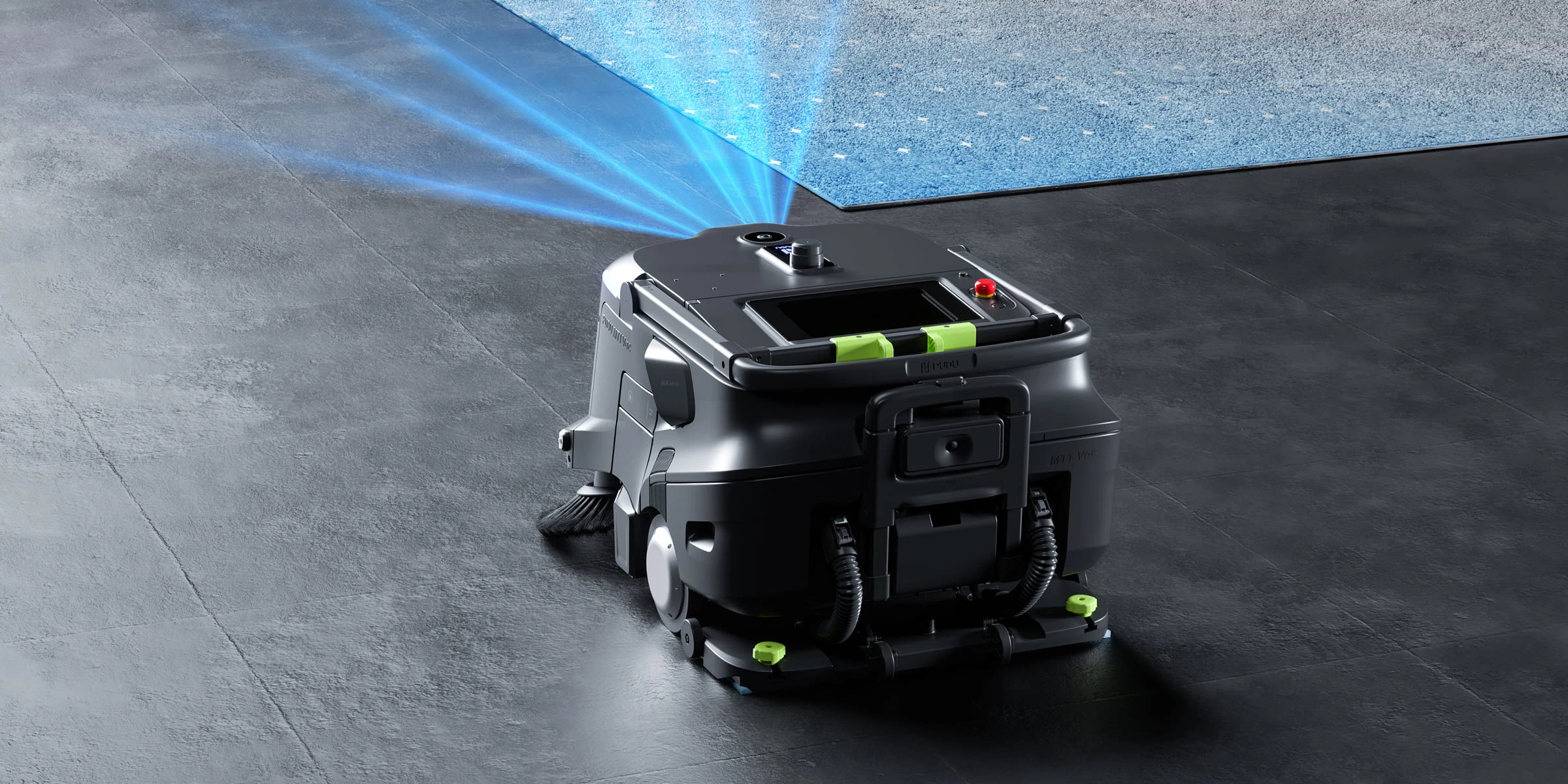
Autonomous sweeping robots are already well established on demanding factory floors. Production-ready models from vendors such as Kemaro, Gausium and Pudu reliably pick up sawdust, metal shavings, glass fragments and general production waste in manufacturing plants — including tight spots like under conveyor belts — without halting production.
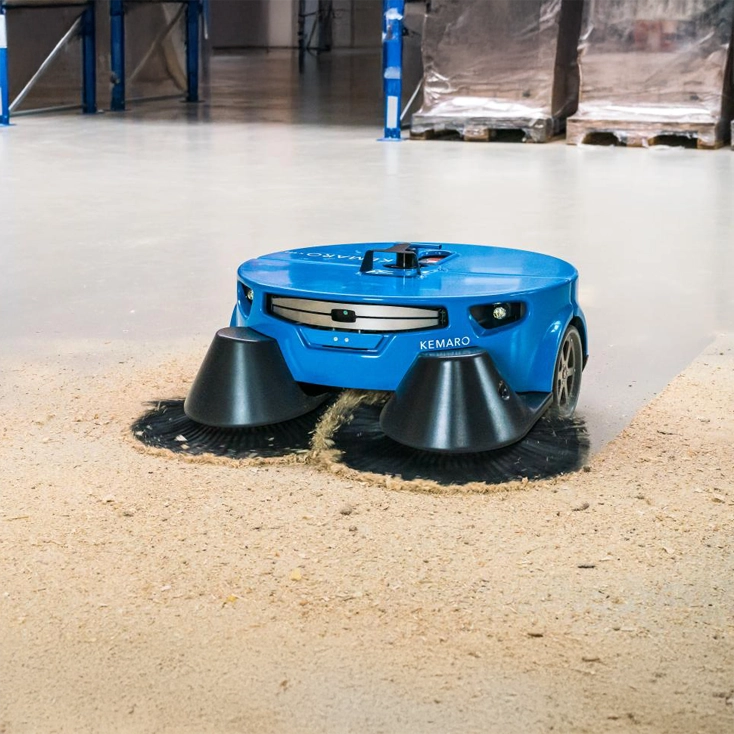

That track record shows the core cleaning task itself scales well beyond offices and retail.